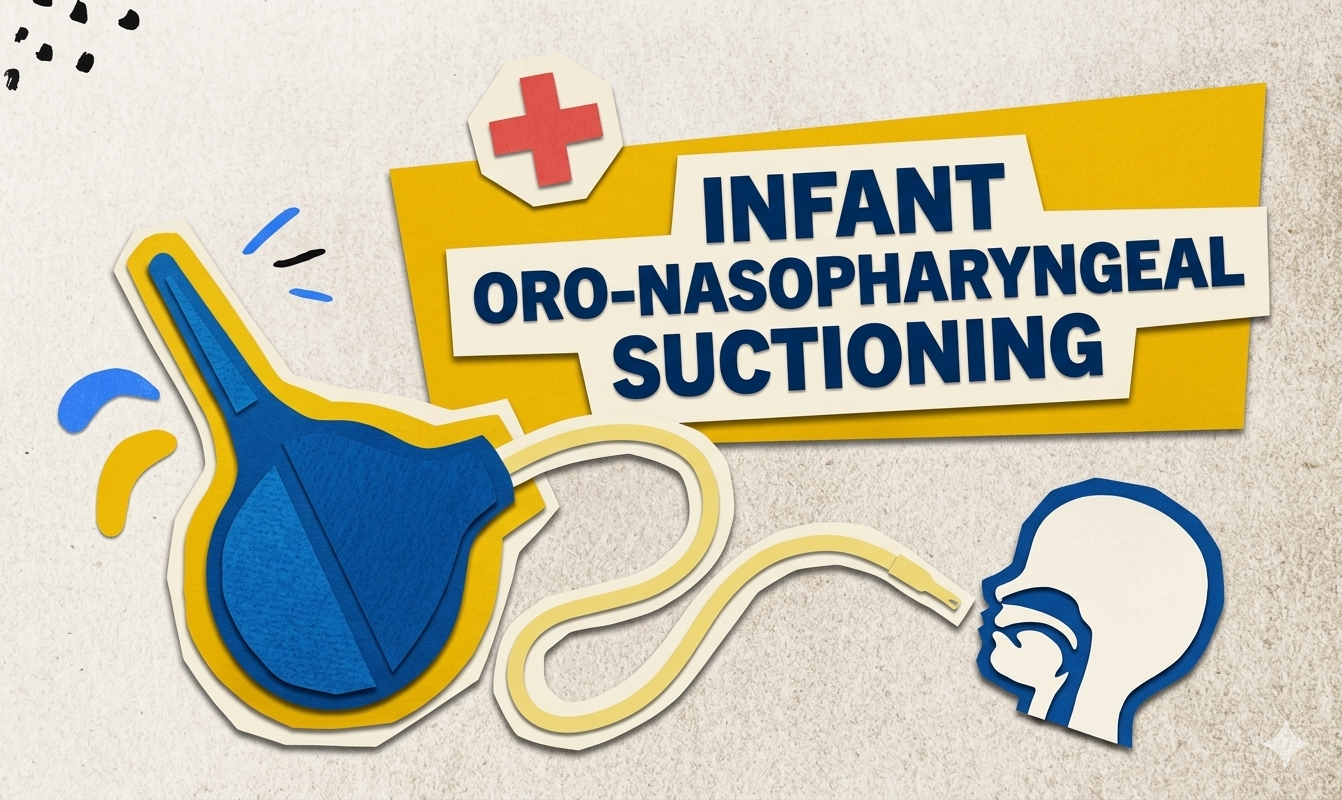

Infant oro-nasopharyngeal suctioning is a nursing procedure performed to remove excess mucus, fluids, or secretions from an infant’s mouth, pharynx, and nose using a suction catheter connected to a suction apparatus. This procedure helps maintain a clear airway, facilitates breathing, and prevents respiratory complications. It requires strict adherence to aseptic technique, careful handling to avoid trauma, and continuous monitoring of the infant’s respiratory status.

Why is this procedure performed?
- To maintain a patent airway in the infant.
- To remove secretions that may cause airway obstruction.
- To promote effective ventilation and oxygenation.
- To prevent complications such as aspiration, respiratory distress, or infection.
- To allow assessment of respiratory status during and after suctioning.
Materials Needed
- Suction machine
- Sterile saline solution
- Suction catheter or sterile suction kit
- Sterile gloves
- Sterile cup or glass for flushing
- Stethoscope
Assessment
- Note for physician’s order.
- Assess rate and depth of infant’s respirations, breath sounds, and chest movements. Check pulse rate, skin color, and presence of secretions in mouth and nose.
Planning
- Wash your hands.
- Gather necessary equipment.
Implementation
- Set up cup or container and pour sterile water or saline for lubrication.
- Open sterile suction package.
- Attach connector tubing to suction equipment.
- Turn on suction mechanism and test by placing thumb over the end of the tube.
- Place infant on a bassinette under droplight. Place in a Trendelenburg position with head turned to his side.
- Put on gloves.
- Pick up catheter with dominant hand and using nondominant hand, attach connector end to suction tubing.
- Test equipment by suctioning water through tubing and catheter.
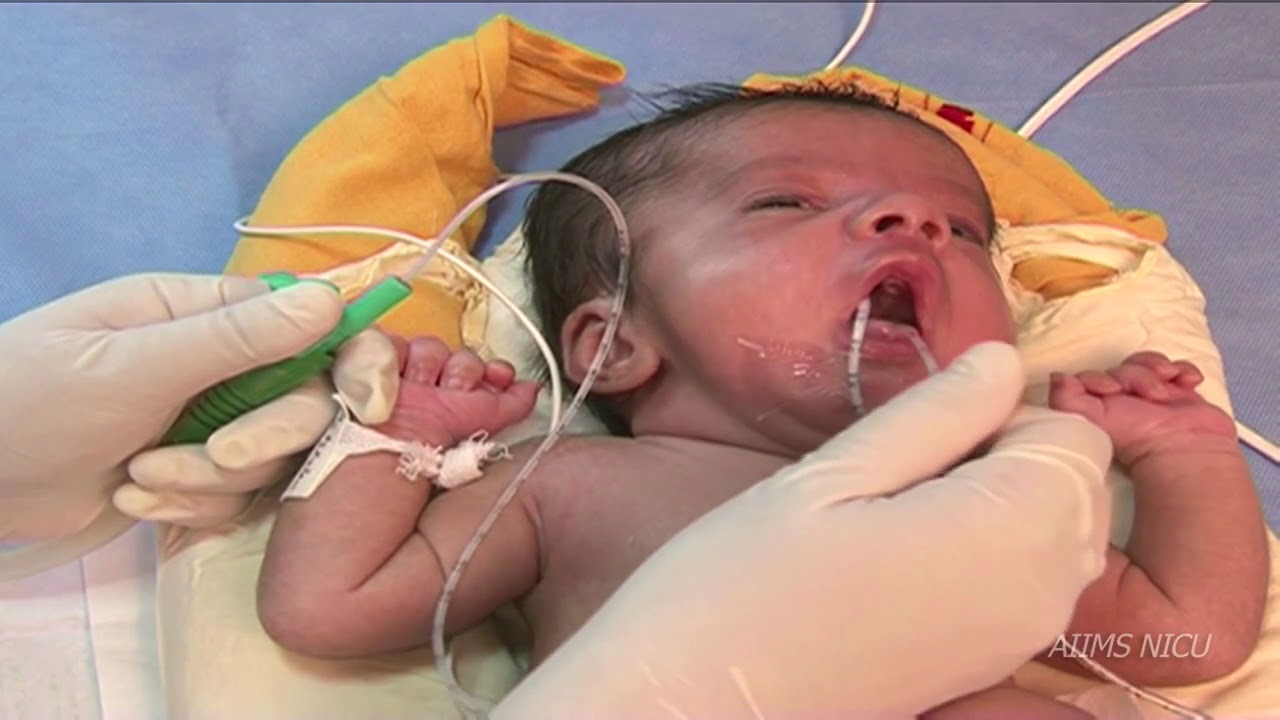
- Insert the catheter sideways to the infant’s mouth. Make sure that the suction port is not occluded/covered.
- Apply suction by covering the suction port no more than 10 seconds.
- Withdraw the catheter in a circular motion while suction port is still covered.
- Flush the catheter with sterile water or NSS to remove secretions.
- Repeat steps 9 to 12 until the mouth is clear.
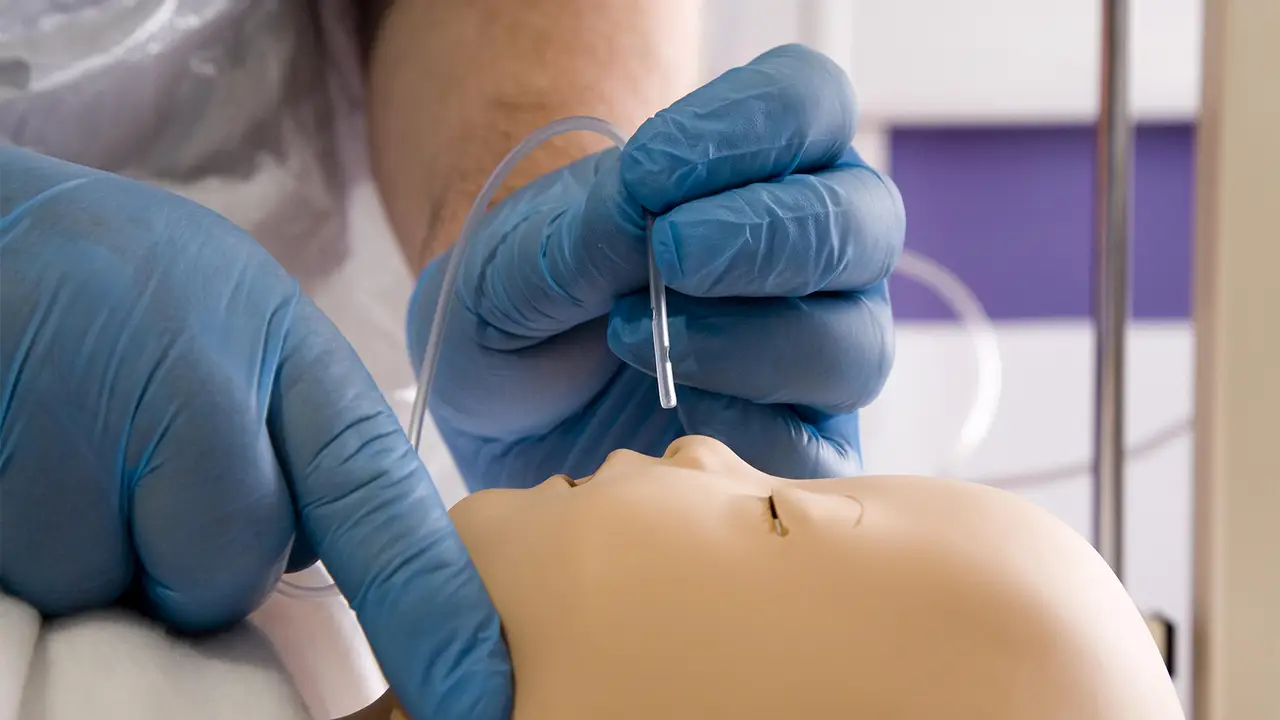
- Insert the catheter into the infant’s nose, one nostril at a time. Make sure that the suction port is not occluded/covered.
- Apply suction by covering the suction port no more than 10 seconds.
- Withdraw the catheter in a circular motion while suction port is still covered.
- Flush catheter with sterile water or NSS to remove secretions.
- Repeat the steps 14 to 17 until each nostril is clear.
- Turn off the suction.
- Listen to infant’s breath sounds. Repeat if needed.
- Remove gloves and discard them.
- Place infant on his side.
- Wash hands.
Evaluation
Evaluate using the following criteria:
- Breath sounds clear
- Mouth and nose free of secretions
Documentation
Document any pertinent observations or according to hospital’s policy.