
Administering medications through oral, otic, ophthalmic, and intranasal routes is a nursing procedure that ensures safe and accurate delivery of prescribed drugs through different body systems. Each route requires proper preparation, correct positioning, aseptic technique, and careful observation to achieve therapeutic effects and prevent complications.

Why is this procedure performed?
- To administer medications safely and accurately through the prescribed route
- To achieve desired therapeutic effects of medications
- To prevent medication errors and contamination
- To promote patient comfort during administration
- To observe and identify possible side effects or adverse reactions.
Materials Needed
- Medication card
- Sterile gloves (optional)
- Medicine tray
- Medicine cup (calibrated)
- Medicine dropper
- Face towel
- Prescribed syrup medication
- Prescribed medicine in a blister foil pack
- Prescribed medicine in a multidose bottle
- Prescribed otic drops
- Prescribed ophthalmic drops
- Prescribed intranasal drops/spray
- Cotton tip applicators
Assessment
- Verify the physician’s order of medication. Check for the medication listed on the medicine card against the physician’s order sheet and standing order sheet.
- Check the client’s chart for allergies.
- Know the actions, special nursing considerations, safe-dose ranges, purpose of administration, and adverse effects of medications to be administered.
Planning
- Wash your hands.
- Prepare medications for one client at a time.
- Ensure proper lighting to facilitate ease in administration.
Implementation
- Select the proper medication from the drawer or stock and compare with the Kardex. Check expiration dates and perform calculations.
- Recheck each medication that has been prepared for one client; recheck once again with the medication order before taking them to the client.
- Transport medications to the client’s bedside carefully and keep the medications in sight at all times.
- See that the client receives medications at the correct time.
- Identify the client carefully using three correct ways:
- Check the name of the client’s identification band
- Ask the client his or her name
- Verify the client’s identification with a staff member who knows the client
Oral Medications
- For unit-dose packaged medications, place capsule or tablet directly in a disposable cup. Do not open package until at bedside.
- For medications in a stock container, pour the necessary number into the bottle cap and then place the tablets in a medication cup.
- For liquid medications, remove the cap and place it upside down. Hold the bottle with the label against the palm. Place the medication cup on a flat surface at eye level. Pour the desired amount of liquid and read the amount of medication at the bottom of the meniscus.
- Assist the client to an upright or lateral position.
- Offer water or other permitted fluids with pills, capsules, tablets, and some liquid medications.
- Ask the client’s preference regarding medications to be taken by hand or in cup and one at a time or all at once.
- If the capsule or tablet falls to the floor, it must be discarded and a new one administered.
- Record any fluid intake and output measurement as ordered.
- Remain with the client until each medication is swallowed.

Otic Instillation
- Wash hands.
- Position the client lying with the ear being treated uppermost.
- Apply gloves if infection is suspected.
- Clean the pinna of the ear and the meatus of the ear canal using cotton-tipped applicators and indicated solution.
- Warm the medication container in your hand, or place it in warm water for a short time.
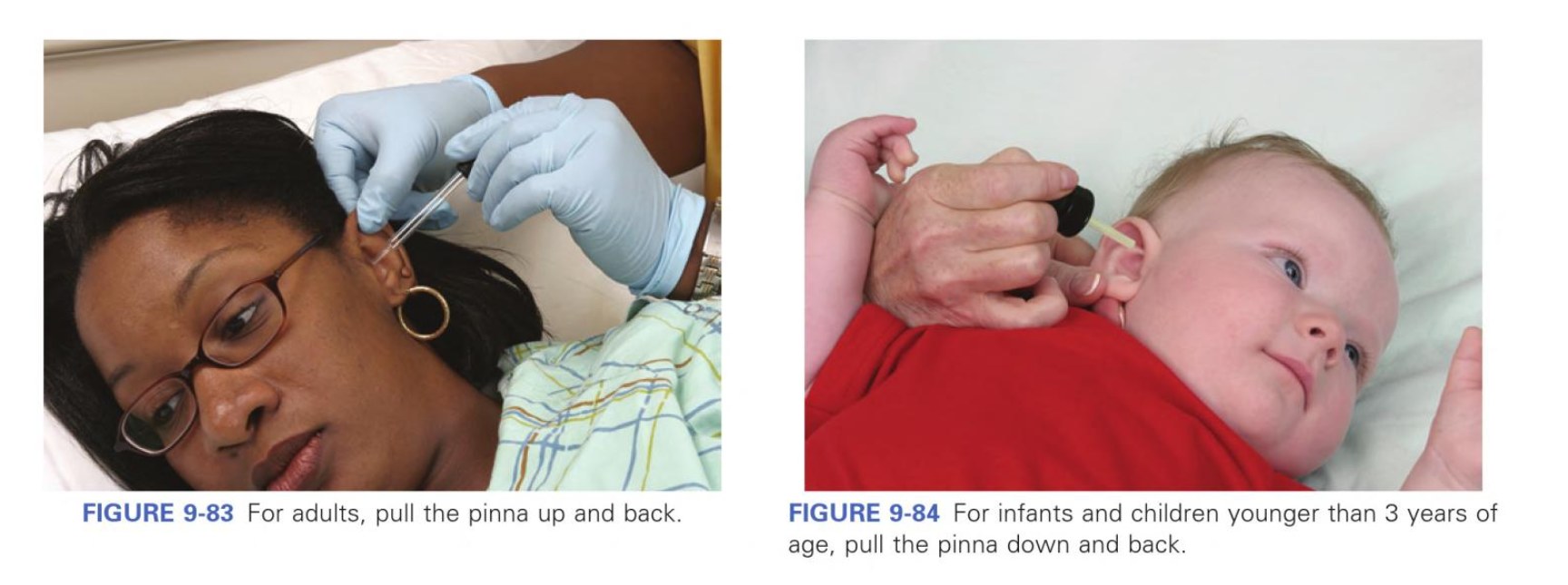
- Straighten the auditory canal:
- Pull the pinna upward and backward for clients over 3 years of age
- For children below 3 years old, pull the ear down and backward
- Instill the correct number of drops along the side of the ear canal.
- Press gently but firmly a few times on the tragus of the ear.
- Ask the client to remain in the side-lying position for about 5 minutes.
- Insert a small piece of cotton fluff loosely at the meatus of the auditory canal for 15 to 20 minutes. Do not press it into the canal.
- Wash hands.
Ophthalmic Instillation
- Assist the client to a comfortable position, usually lying.
- Wash hands.
- Clean the eyelid and eyelashes using sterile cotton balls moistened with sterile irrigating solution or sterile normal saline. Wipe from inner canthus to outer canthus.
- Check the ophthalmic preparation for the name, strength, and number of drops if a liquid is used.
- Give the client a dry sterile absorbent pad.
- Instruct the client to look up at the ceiling.
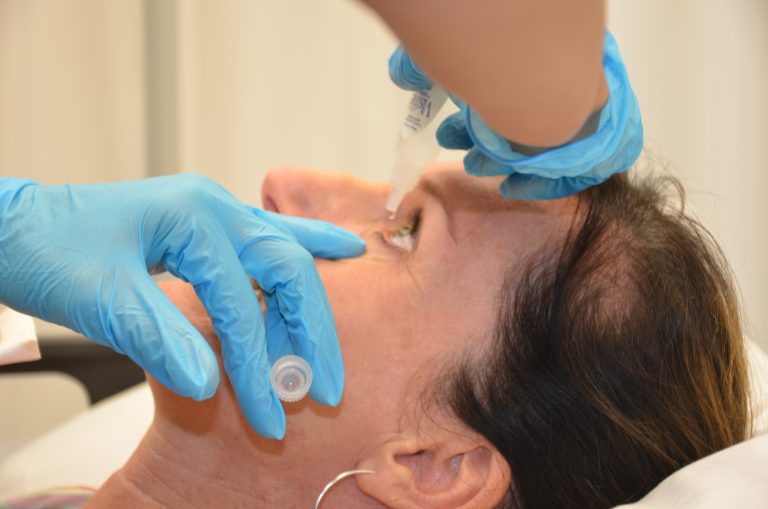
- Expose the lower conjunctival sac by placing the thumb or fingers of your non-dominant hand on the cheekbone just below the eye and gently drawing down the skin.
- Holding the medication in the dominant hand, place hand on client’s forehead to stabilize hand.
- Approach the eye from the side and instill the correct number of drops onto the outer third of the lower conjunctival sac. Hold the dropper 1 to 2 cm above the sac.
- Instruct the client to close the eyelids but not squeeze them shut.
- Using sterile gauze pad, press firmly on the nasolacrimal duct for at least 30 seconds.
- Wash hands.
Intranasal Instillations
- Wash hands and don gloves.
- Provide the patient with paper tissues and ask the patient to blow his or her nose unless contraindicated.
Nasal Drops
- Have patient sit up with head tilted well back.
- If lying down, tilt head back over a pillow for ethmoid and sphenoid sinuses
- Supine position with head turned toward side treated for maxillary and frontal sinuses
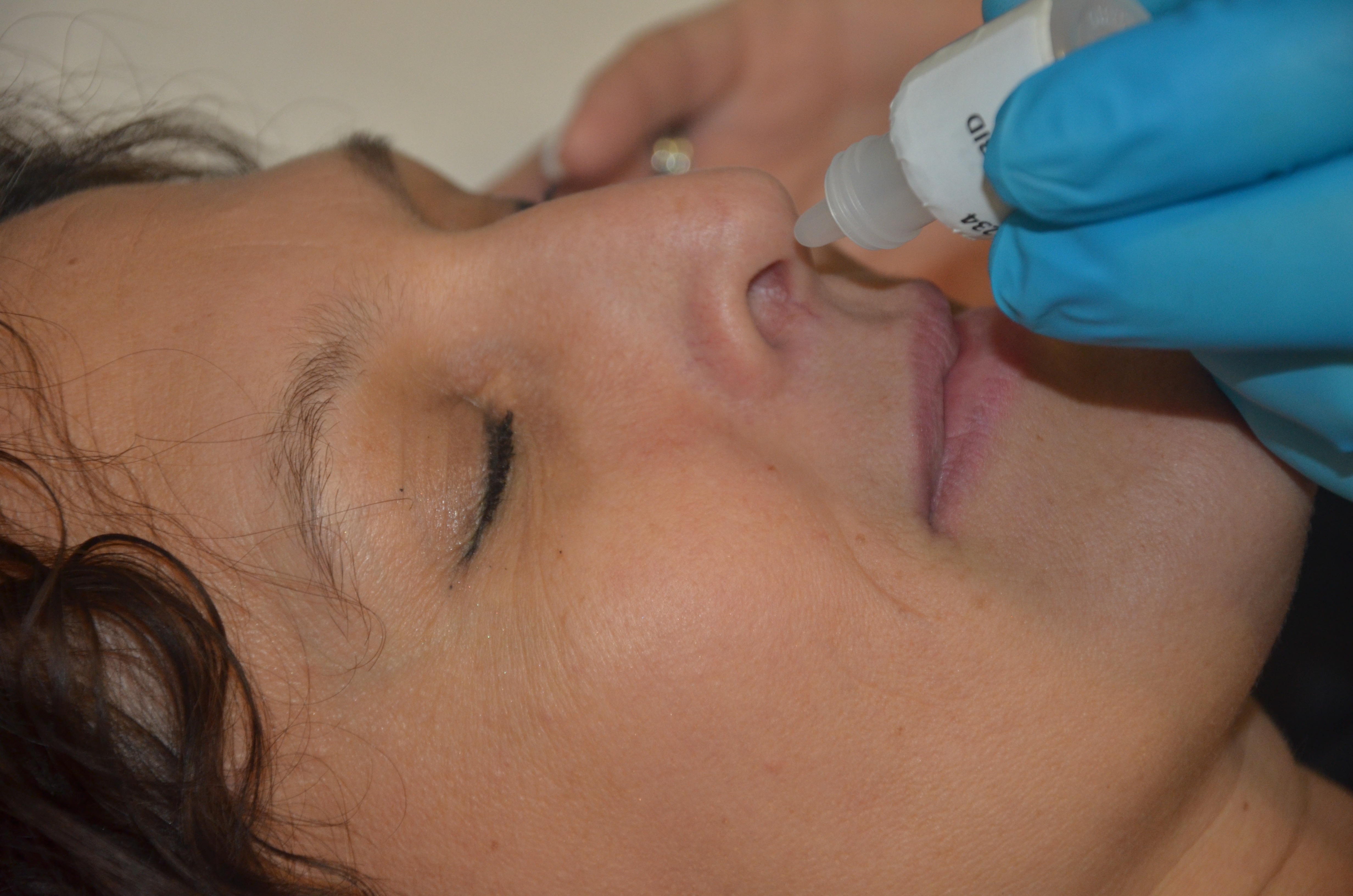
- Draw sufficient solution into dropper for both nares. Do not return excess solution to stock bottle.
- Ask patient to breathe through the mouth. Hold tip of nose up and place dropper just above nares, about 1/3 inch. Instill prescribed drops into each nare. Avoid touching nares with the dropper.
- Have patient remain in position with head tilted back for a few minutes.
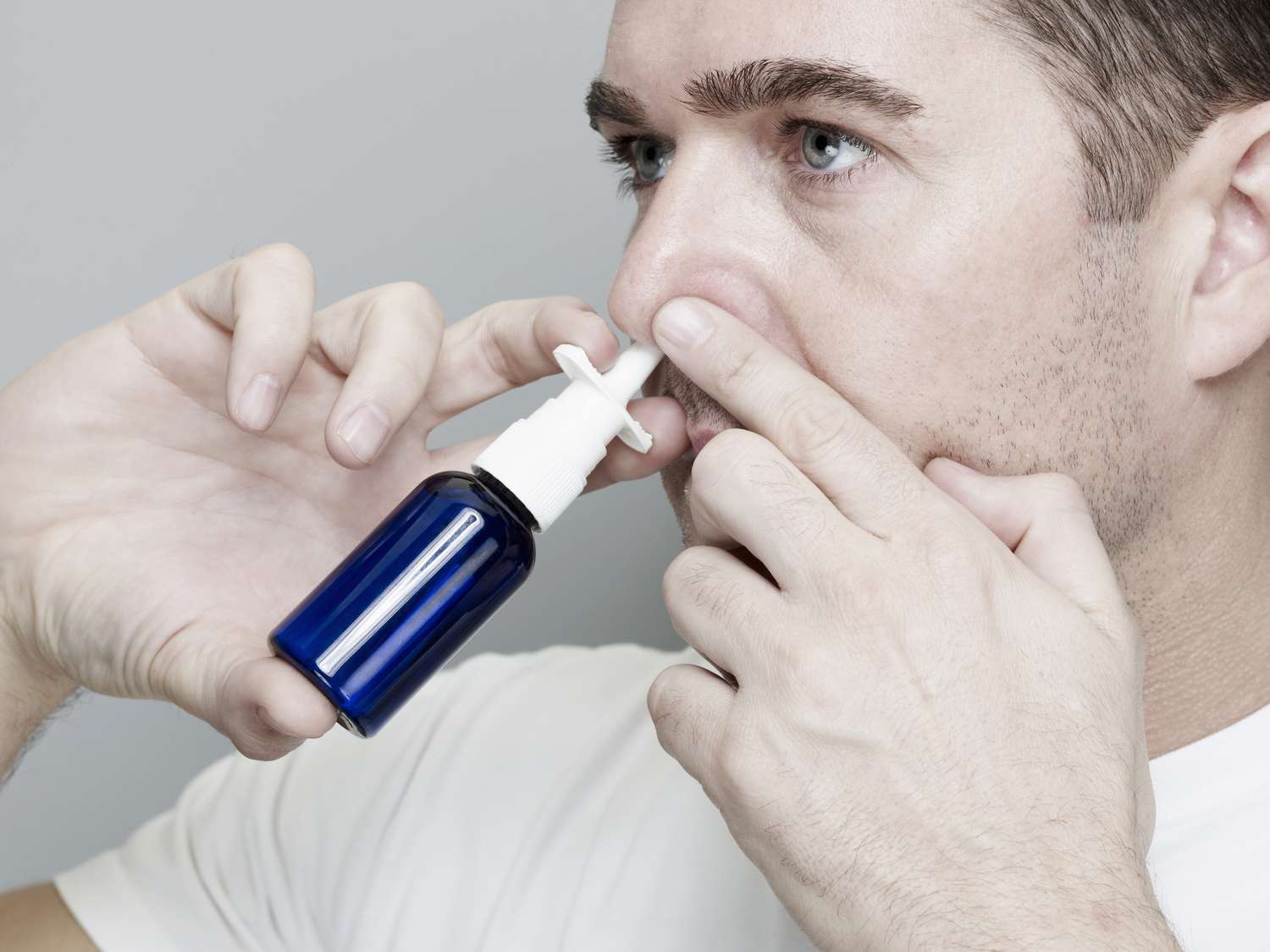
Nasal Spray
- Position the patient sitting with the head tilted back. For children, position head upright.
- Open nasal spray by removing the cap and hold bottle upright with index and middle finger on the finger flange.
- Press and test spray in air until mist emerges to prime.
- Hold the tip just inside the nares, push bottle to spray, and instruct client to inhale as spray enters nasal passages.
- Remove gloves.
- Wash hands.
Evaluation
- Evaluate using the following criteria:
- 10 rights followed
- Correct site used
- Effectiveness of medication assessed
- Any side effect promptly identified
Documentation
Record pertinent data in terms of:
- Medication dosage
- Route of administration
- Time of administration
- Signature