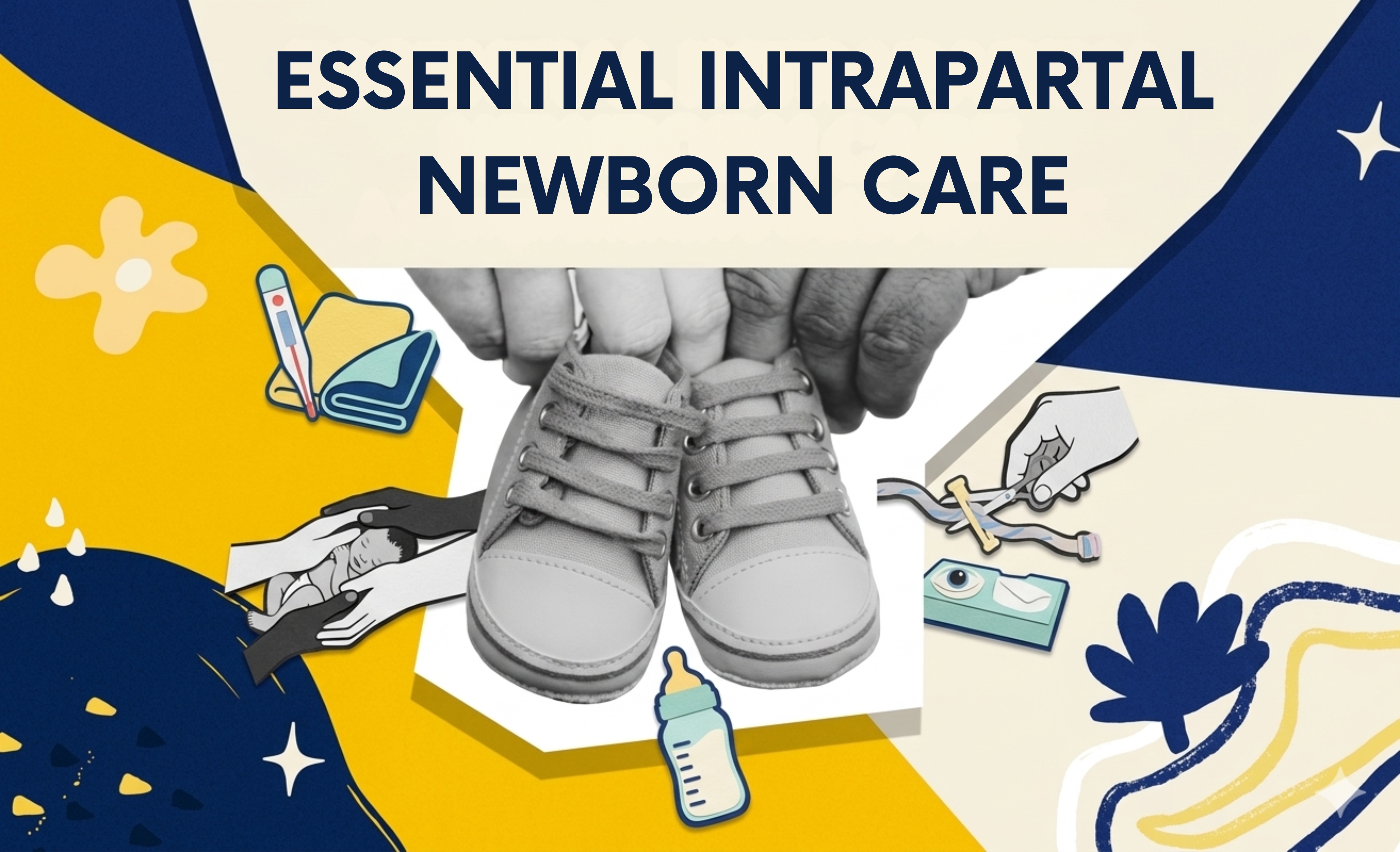

Essential Intrapartal Newborn Care (EINC) is a set of interventions performed immediately after birth to ensure the newborn’s well-being. It includes immediate drying, skin-to-skin contact, umbilical cord care, administration of prophylactic medications (vitamin K, erythromycin, vaccines), and early initiation of breastfeeding. This procedure promotes thermoregulation, prevents infection, facilitates bonding, and establishes proper feeding practices.
Why is this procedure performed?
- To prevent hypothermia and infection in the newborn
- To promote early mother-infant bonding through skin-to-skin contact
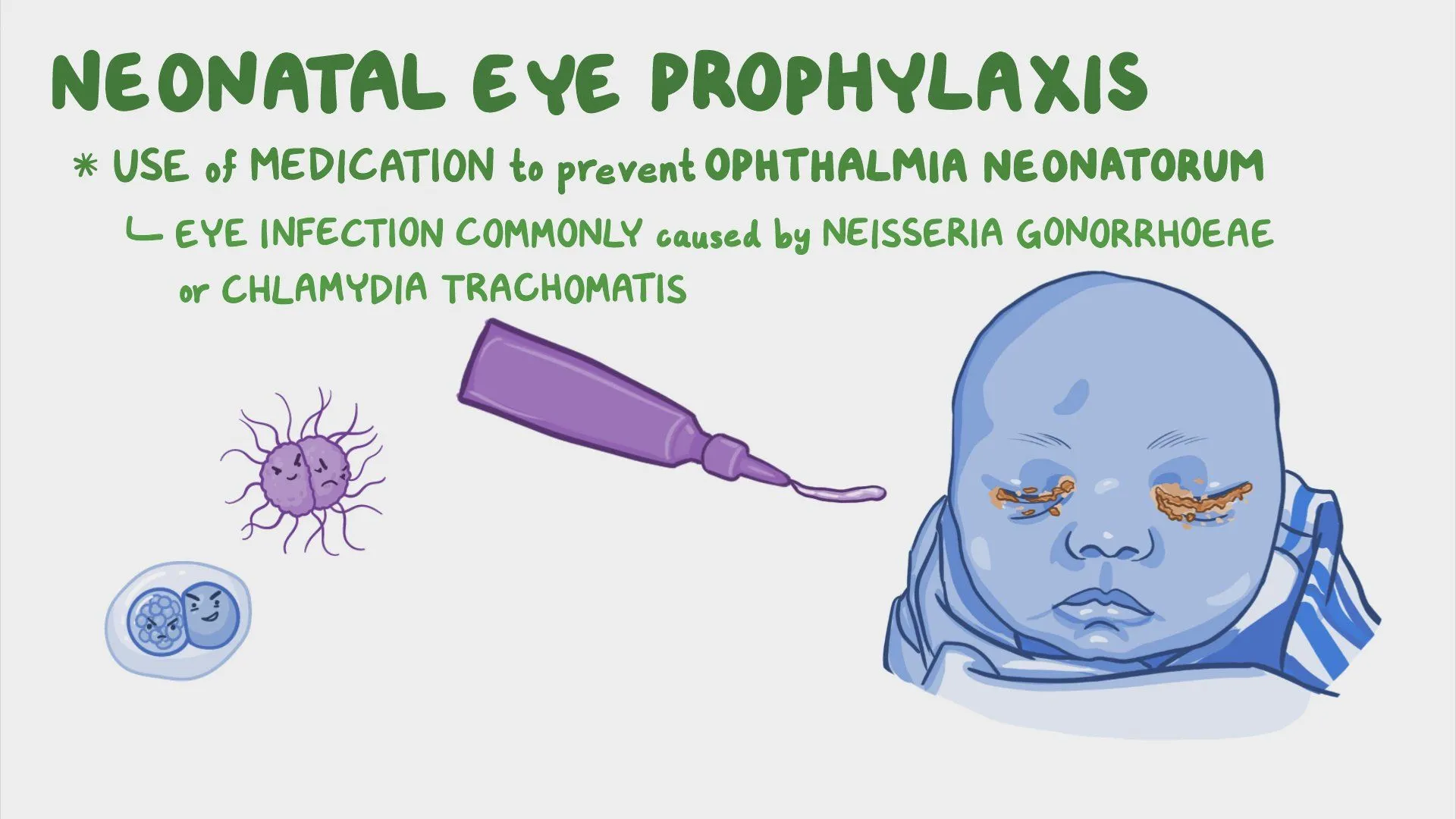
- To provide prophylactic eye care to prevent ophthalmia neonatorum
- To ensure proper administration of vitamin K and vaccines
- To initiate breastfeeding within the first hour of life
Materials Needed
- Baby doll
- Sterile gloves
- Kelly Forceps (straight)
- Plastic umbilical cord clamp
- Surgical scissor
- 2 sets Baby blanket
- Bonnet
- Name tag
- Tape measure
- Weighing scale
- Note pad and pen
- Erythromycin ointment / any ointment in a small tube
- Cotton balls: Dry and Wet (70% Alcohol) in separate containers
- 1 cc syringe (3)
- Vitamin K Ampule
- Hepatitis B Vaccine
- BCG Vaccine
- Methergine Ampule
- 3 cc syringe
- Micropore tape
ASSESSMENT
- Check the temperature of the delivery room.
- Check for signs of imminent delivery like rupture of membranes, perineal bulging, or crowning.
PLANNING
- Notify appropriate staff.
- Arrange materials in a linear fashion.
- Check resuscitation equipment.
IMPLEMENTATION
- Wash hands with clean water and soap.
- Place a blanket over the mother’s abdomen.
- Perform double gloving just before delivery.
- Call out the time of birth.
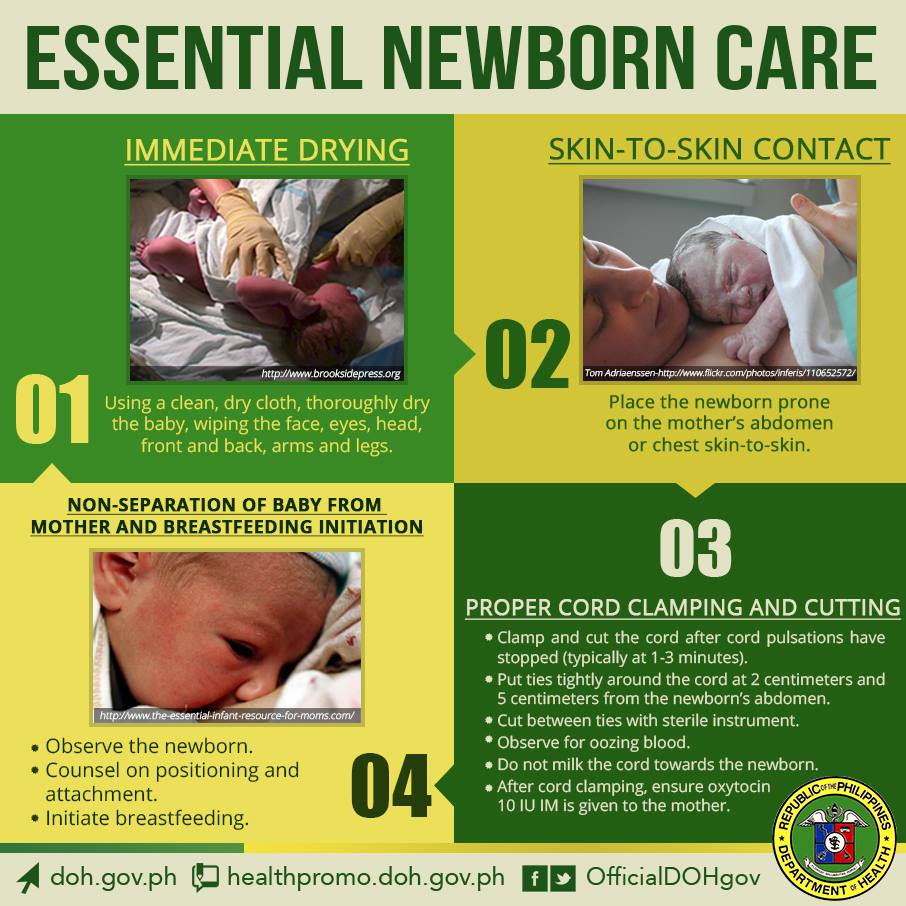
- Dry the newborn thoroughly for at least 30 seconds by wiping the face, head, chest and back, arms and legs (5 seconds each).
- Do a quick check of breathing and perform initial APGAR Scoring.
- Remove the wet cloth.
- Do not suction unless airway is obstructed.
- If the newborn is breathing or crying:
- Position the newborn prone on the mother’s abdomen or chest
- Cover the newborn’s head with a bonnet
- Cover the newborn’s back with a dry blanket
- Inject oxytocin 10 IU IM in mother’s arm or thigh after excluding a second baby.
- Place identification band on the right ankle with: Baby Boy/Girl Surname, Name of Mother, Time of Birth, Date of Birth.
- Remove the first set of gloves.
- Clamp and cut cord between 1–3 minutes or when pulsations stop. Clamp cord with sterile plastic cord clamp at 2cm from the umbilical base.
- Strip the cord away from the baby and clamp again at 5 cm from the base using Kelly forceps.
- Cut the cord close to the plastic clamp so that there is no need for a second trim.
- Do not apply anything (e.g., alcohol, povidone-iodine) onto the stump.
- Perform subsequent APGAR Scoring.
- Once uterus is well contracted, do controlled cord traction with counter-traction and gentle uterine massage.
- Deliver the placenta into a 0.5% decontaminating solution.
- Examine the birth canal for bleeding and lacerations.
- Inspect the placenta and dispose appropriately.
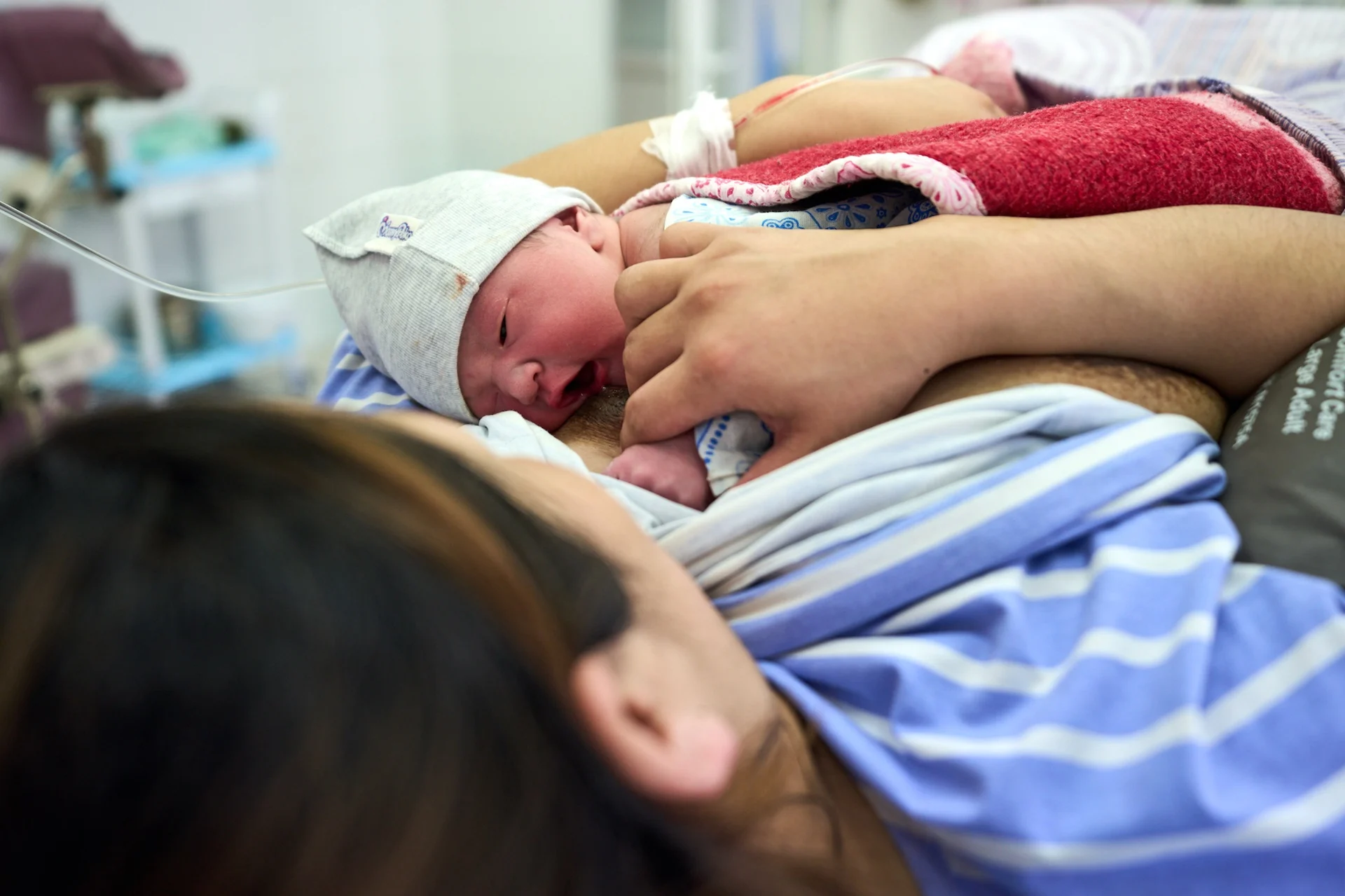
- Keep uninterrupted skin-to-skin contact until baby completes first breastfeed, or at least 60–90 mins even when transferring to the recovery room.
- Watch for feeding cues at 20–90 mins; encourage breastfeeding once present.
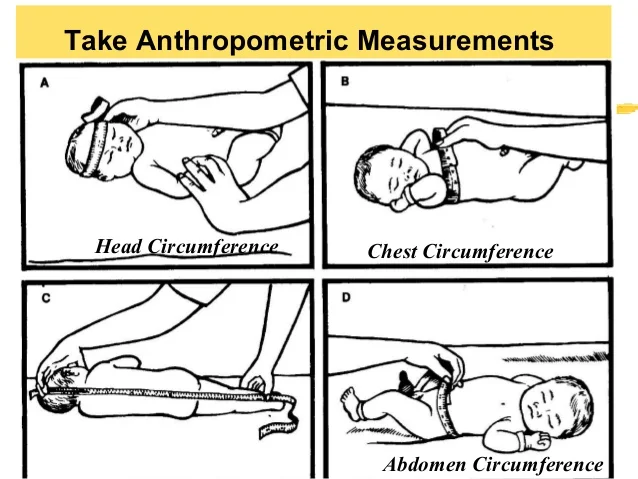
- Perform the first complete physical exam, weighing and anthropometrics (in cm):
- Head circumference (center of forehead to occipital prominence)
- Chest circumference (at nipple level)
- Abdominal circumference (at umbilicus level)
- Length (crown to rump then rump to heel)
- Weigh the infant and record
Crede’s Prophylaxis
- Do eye care after the first breastfeed.
- Clean each eyelid and eyelashes one at a time using sterile cotton ball with saline solution, wiping from inner to outer canthus.
- Expose lower conjunctival sac by placing thumb or fingers of non-dominant hand on cheekbone just below eye and gently draw down the skin on the cheek.
- Holding the tube above conjunctival sac, discard first bead and squeeze 2cm of ointment from inner canthus outward.
- Close eyelids gently but do not squeeze.
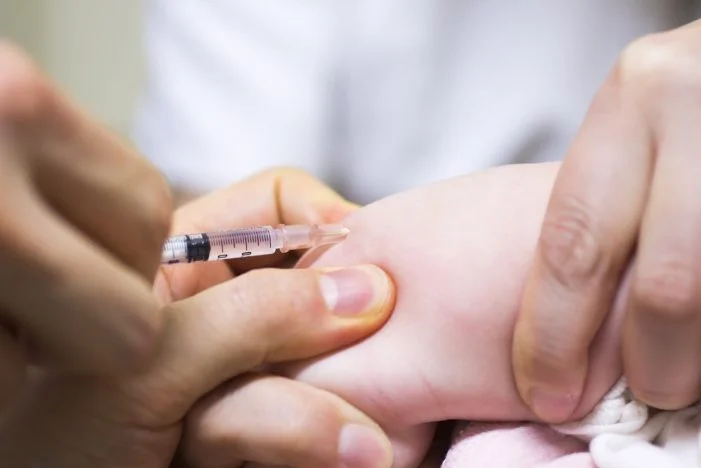
Vitamin K Injection IM at Right Vastus Lateralis
- Clean right vastus lateralis thoroughly with alcohol swab in circular motion and allow to dry.
- Remove needle cap by pulling it straight off.
- Pull skin taut at insertion site to form a V with thumb and index finger of non-dominant hand.
- Pull thumb and index finger in opposing directions, spreading fingers ~3 inches apart.
- Hold syringe in dominant hand, inject needle at 90º angle.
- Move non-dominant hand to hold lower end of syringe; slide dominant hand to tip of barrel.
- Aspirate slowly to check for blood; if blood, discard setup and use new sterile setup.
- If no blood, inject solution slowly.
- Remove needle quickly.
- Massage injection site gently with cotton.
- Do not recap needle; discard in sharps container.
- Give Hepatitis B (IM left vastus lateralis) and BCG (ID right deltoid) after first breastfeed and exam.
- Remove gloves and dispose properly.
- Encourage breastfeeding on demand.
- Observe at least one breastfeed for proper positioning and attachment.
- Check baby’s position: ears, shoulder, and hip aligned; held close to mother’s body; whole body supported.
- Check baby’s attachment: more areola above top lip; mouth wide open; lower lip turned outward; chin touches breast.
- Check baby’s suckling: slow, deep sucks with pauses; cheeks round when suckling; releases breast when finished.
- Minimize handling of newborn.
- Do NOT bathe baby for first 6 hours.
- Do NOT give sugar water, formula, or other liquids.
- Do NOT use pacifiers or bottles.
EVALUATION
- Evaluate overall mother and newborn condition.
- Evaluate medication administration using the following criteria:
- Patient rights followed
- Correct site used
- Effectiveness of medication assessed
- Any side effects promptly identified
DOCUMENTATION
Record pertinent data on mother and newborn assessment record.
Record medication data including: dosage, route of administration, time of administration, signature.