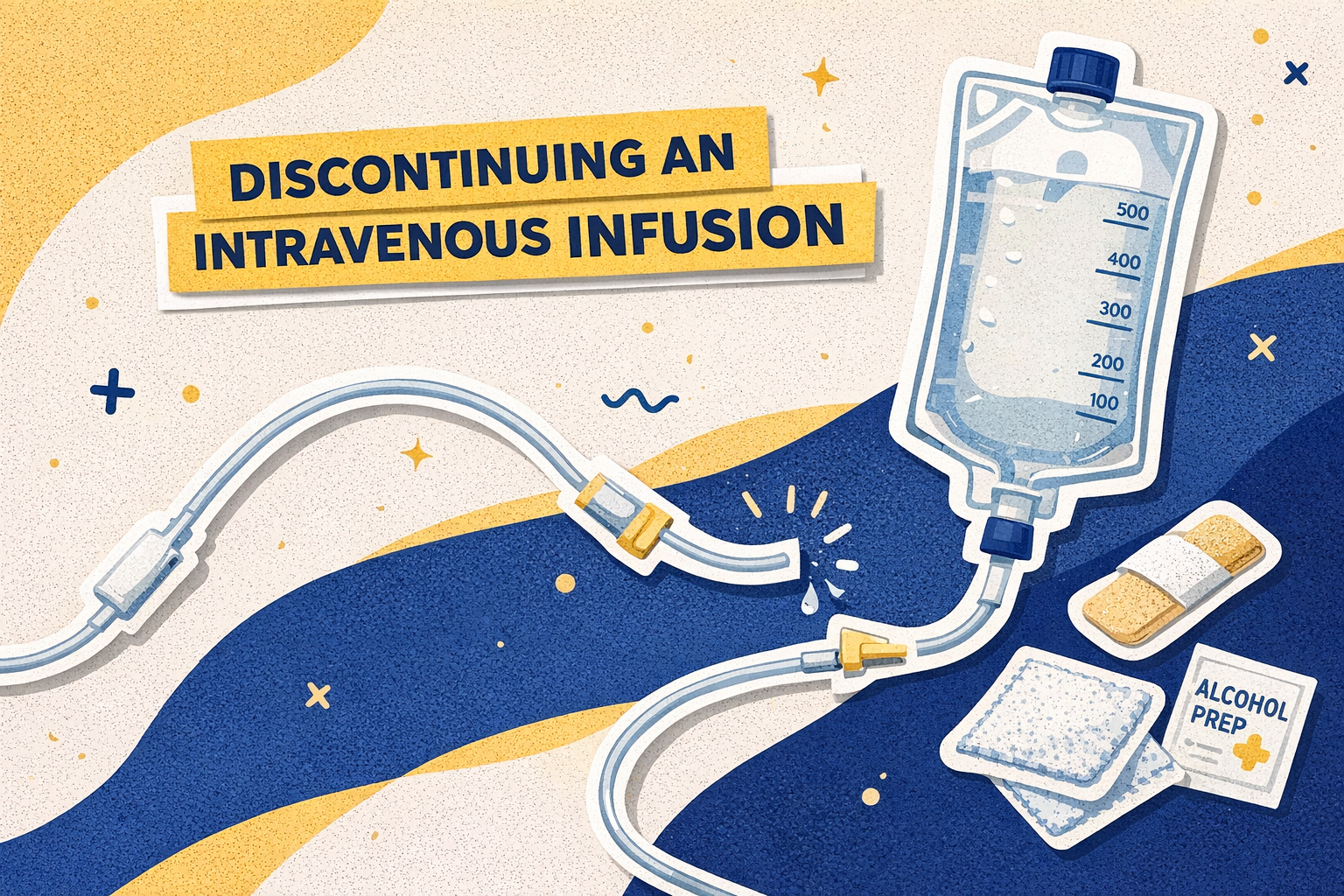

Discontinuing an intravenous (IV) infusion is the procedure of safely removing the IV catheter and stopping the infusion of fluids or medications when the therapy is no longer required. This is done when the patient’s oral fluid intake and hydration status are adequate, or when the intravenous route is no longer needed for treatment. Proper technique is used to prevent bleeding, infection, or other complications.
Why is this procedure performed?
- To stop IV therapy when it is no longer necessary.
- To remove the IV catheter safely after completion of treatment.
- To prevent potential complications such as infection or phlebitis.
- To allow the patient to rely on oral fluids and medications.
- To maintain patient comfort and reduce unnecessary invasive procedures.
Materials Needed
- Sterile cotton balls
- Alcohol swabs
- Plaster
- Clean gloves
Assessment
- Check the order for IV discontinuation.
Planning
- Determine what you will need.
- Wash your hands.
- Gather necessary materials.
Implementation
- Identify patient.
- Explain the procedure to the patient.
- Don clean gloves.
- Turn off the IV flow.
- Remove tape and dressing. Swab a cotton ball with alcohol into the tapes to remove the adhesive.
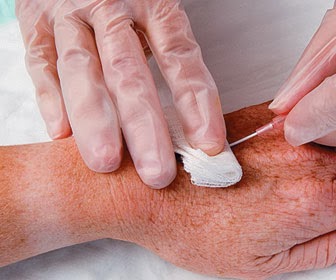
- Hold the dry cotton ball above the entry site.
- Remove the cannula by pulling it straight out.
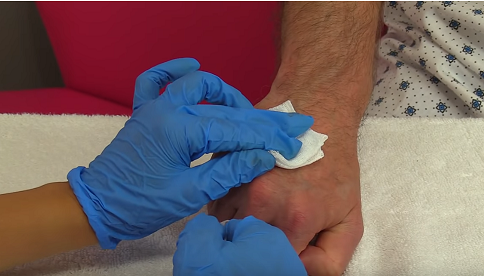
- Put pressure on the site. Apply tape.
- Elevate the patient’s arm for 1 minute, keeping pressure on site until bleeding is controlled.
- Remove all equipment. Discard to appropriate bins.
- Remove and discard gloves.
- Wash your hands.
Evaluation
Evaluate using the following criteria:
- Intravenous infusion is discontinued
- Any bleeding is controlled
- Cannula is intact
Documentation
Document that IV was discontinued with cannula intact, assessment of site and time.