

Female catheterization is a nursing procedure used to insert a catheter through the urethra into the bladder to drain urine, obtain a sterile urine specimen, monitor urinary output, or relieve urinary retention. It may be done as straight catheterization for temporary drainage or specimen collection, or as indwelling/foley catheterization for continuous bladder drainage. Proper aseptic technique is essential to prevent urinary tract infection and ensure patient safety.
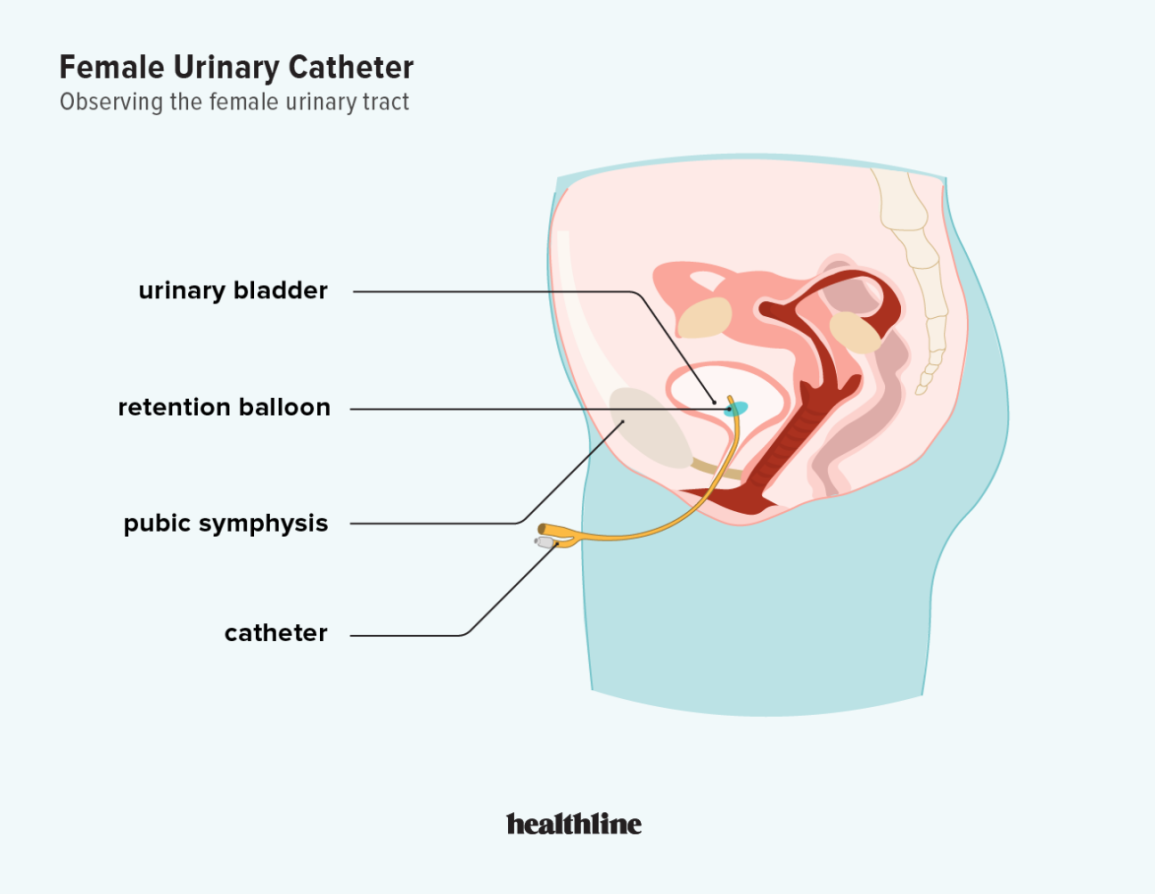
Why is this procedure performed?
- To relieve urinary retention
- To obtain a sterile urine specimen for diagnostic testing
- To monitor accurate urinary output
- To keep the bladder empty before, during, or after surgery
- To manage patients who cannot void independently
- To promote bladder training before catheter removal
Materials Needed
- Sterile gloves
- Clean gloves
- Straight/Foley or Indwelling catheter of appropriate
- Waterproof pad (Kelly pad)
- Pitcher with lukewarm water
- Drape
- Cotton balls with betadine solution
- Water soluble lubricant
- Urine specimen container
- Pail
- Waste receptacle
For an indwelling catheter:
- 10ml Syringe prefilled with sterile water in amount specified by catheter manufacturer
- Collection bag and tubing
ASSESSMENT
Review the need for performing perineal care and check order for catheterization.
Assess the genital of your client and determine the perineal-genital hygiene practices, self-care abilities, etc.
PLANNING
- Gather all the materials needed.
- Identify the patient. Explain to the client what you are going to do, why it is necessary and how she can cooperate.
- Perform hand hygiene.
IMPLEMENTATION
- Place the patient in a lithotomy position (if prior to NSD) or supine with knees flexed, feet about 2 feet apart, and hips slightly externally rotated, if possible for other indications.
- Place Kelly pad under the client’s buttocks.
- Drape the client’s abdomen and thighs.
- Ensure adequate lighting in the perineal area
- Wash hands.
- Place the sterile tray within reach containing the following:
- Open sterile gloves and make a sterile field. Ensure following the sterile technique while doing so.
- Away from your gloves, place 8 pieces of cotton balls with betadine solution.
- Put an ample amount of water soluble lubricant on any vacant spot in your sterile field.
- Open straight catheter and place on the sterile field using sterile technique.
For foley / indwelling catheterization:
- Open the package of the catheter near the bifurcated end ONLY. Do not remove catheter from the packaging.
- Connect the urine bag to the appropriate hub. Ensure that the urine bag is closed.
- Attach the prefilled syringe with appropriate amount of sterile water to the inflation hub.
- Pretest the balloon tip by injecting the sterile water and see if balloon forms without leak and then deflate again.
- Test the temperature of water and pour a small amount of water over the perineum and the inner thighs
- Put on sterile gloves.
- Clean the perineal area using your dominant hand.
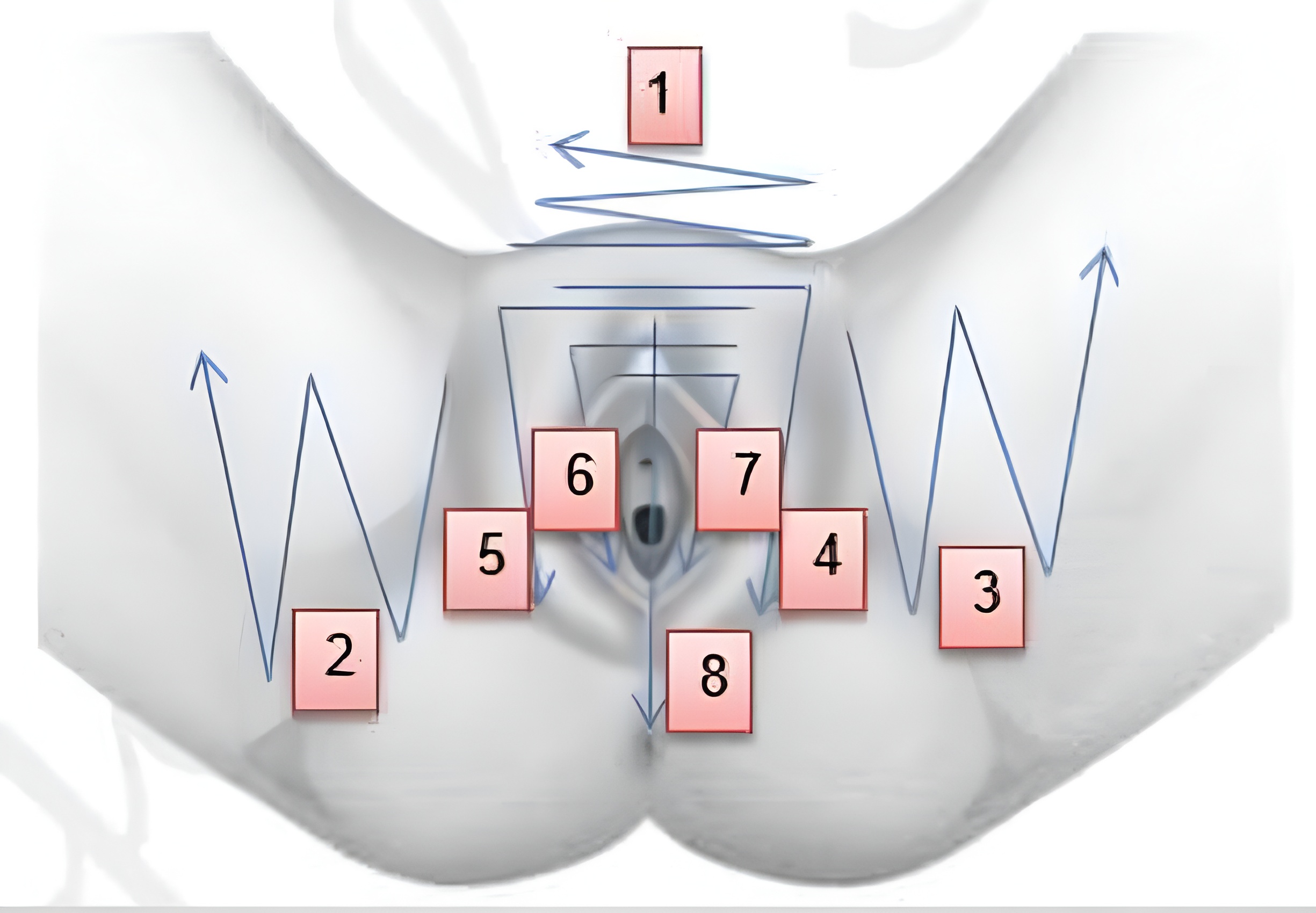
- Clean mons pubis and the left and right inner thighs by using cotton balls with betadine solution in a single zigzag stroke starting at the proximal to the distal area of the perineum.
- Clean the labia majora using figure of 7 on the left labia and a reverse figure of seven on the right labia using a single stroke with each cotton.
- Clean the labia minora by spreading them with your non-dominant hand. Use the same manner for cleansing as the labia majora.
- Apply a last single downward stroke from the urinary orifice to the anus.
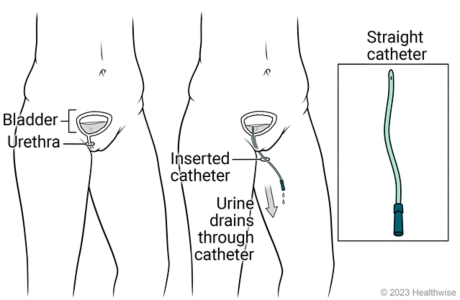
STRAIGHT CATHETERIZATION
- Pick the catheter using your dominant hand and apply ample amount of water soluble lubricant at the insertion tip of the catheter about 5–7.5 cm (2–3 inches) using strict aseptic technique.
- Using the nondominant hand, expose the urinary meatus, separate the labia minora, and retract the tissue upward.
- Place the drainage end of the catheter in the urine receptacle using your non-dominant hand.
- Gently insert the catheter into the urinary meatus until urine flows and advance it farther about 5 cm (2 inches). If there is resistance, do not force the catheter. Ask the client to take deep breaths.
- Allow some urine to flow then collect specimen for urinalysis.
- Fully empty the bladder and then remove the catheter by pinching and withdrawing it smoothly.
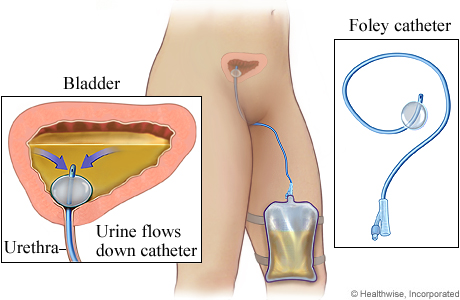
INDWELLING / FOLEY / RETENTION CATHETERIZATION
- Pick the catheter using your dominant hand and apply ample amount of water soluble lubricant at the insertion tip of the catheter about 5–7 cm (2–3 inches) using strict aseptic technique.
- Using the nondominant hand, expose the urinary meatus, separate the labia minora, and retract the tissue upward.
- Gently insert the catheter into the urinary meatus until urine flows into the urine bag and advance it farther about 5 cm (2 inches). If there is resistance, do not force the catheter. Ask the client to take deep breaths.
- Hold the catheter with the nondominant hand while inflating the retention balloon with the appropriate volume by pushing the plunger of the prefilled syringe initially attached to the inflation hub.
If the client complains of discomfort, immediately withdraw the instilled fluid, advance the catheter farther, and attempt to inflate the balloon again.
Pull gently on the catheter until resistance is felt to ensure that the balloon has inflated and to place it in the trigone of the bladder.
If indicated, urine specimen may be collected from the pre-attached drainage bag this initial time only.
Secure the catheter tubing with tape on the thigh or using non-adhesive catheter-securing devices.
Next, hang the bag below the level of the bladder. No tubing should fall below the top of the bag.
Wipe any remaining antiseptic or lubricant from the perineal area.
Return the client to a comfortable position.
Discard all used supplies in appropriate receptacles.
Remove and discard gloves.
Perform hand hygiene.
BLADDER TRAINING
- Clamp the catheter for specified periods of time (eg. 2–4 hours) or until the client feels a full bladder or urge to void.
- Release the clamp to allow the bladder to empty.
- If the client feels the urge to void, proceed to catheter removal procedure.
REMOVAL OF INDWELLING / FOLEY CATHETER
- Drain urine in the drainage bag.
- Remove the tape on the thigh or the non-adhesive catheter-securing device attached.
- Prepare a sterile syringe for deflating the balloon. The syringe should be large enough to withdraw all the solution in the catheter balloon.
- Position the client supine with legs bent.
- Drape the client.
- Remove the catheter-securing device attaching the catheter to the client.
- Don clean gloves.
- Insert the syringe into the injection port of the catheter and withdraw the fluid from the balloon.
- After all of the fluid is removed from the balloon, gently withdraw the catheter. Do not pull the catheter while the balloon is inflated, doing so will injure the urethra.
- Discard the catheter and urine bag in the appropriate container.
- Remove and discard gloves.
- Perform hand hygiene.
- Place the client in a comfortable position.
EVALUATION
Perform re-assessment of the genitals and note any signs of abnormality.
Note for any untoward client’s response.
DOCUMENTATION
Record the procedure done and any assessments made.