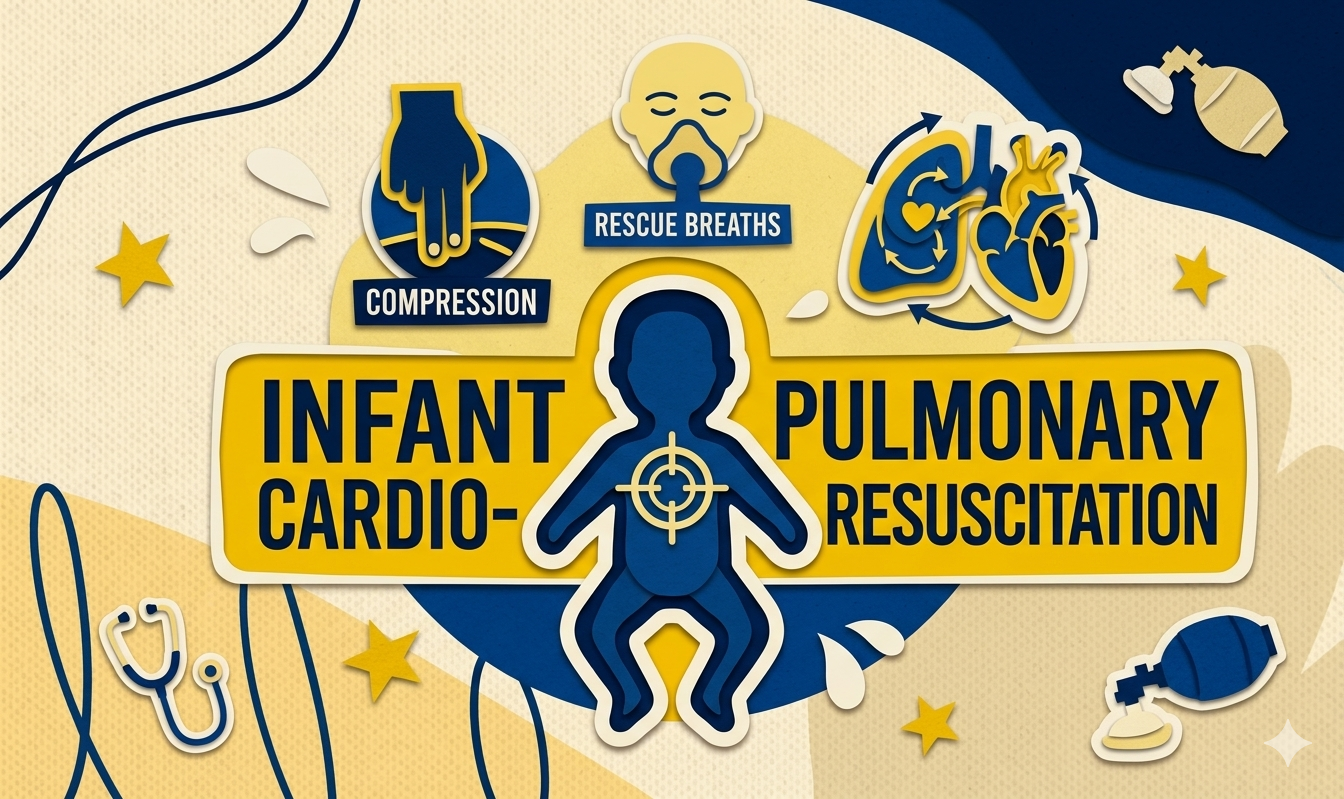

Cardiopulmonary resuscitation (CPR) is the basic life-saving skill used in the event of cardiac, respiratory, or cardiopulmonary arrest to maintain tissue oxygenation by providing external cardiac compression and/or artificial respiration. CPR is initiated when an infant is found without or develops absence of a pulse or respiration or both.
Why is this procedure performed?
- To restore breathing when an infant stops breathing.
- To maintain blood circulation when the heart stops beating.
- To deliver oxygen to the brain and other vital organs.
- To prevent brain damage and other life-threatening complications.
- To increase the infant’s chance of survival until advanced medical care is available.
- To respond to emergencies such as choking, drowning, trauma, or sudden infant collapse.
Materials Needed
- Hard surface
- Gloves
- Bag-valve mask
- Oral airway
- Emergency resuscitation cart
- Documentation forms
Assessment
- Make sure the scene is safe for you and the infant.
- Ensure that personal protective equipment (PPE) is on. Make sure the facemask is on and don gloves.
Planning
- Introduce self to parent/guardian/relative.
- Place the infant on a flat surface.
Implementation
- Tap the victim’s foot and check for the infant’s response.
- Simultaneously assess for the pulse and check for breathing. Do this for no more than 10 seconds.
- Check for the infant’s pulse:
- Place 2 fingers on the inside of the upper arm (brachial artery), between the infant’s elbow and shoulder.
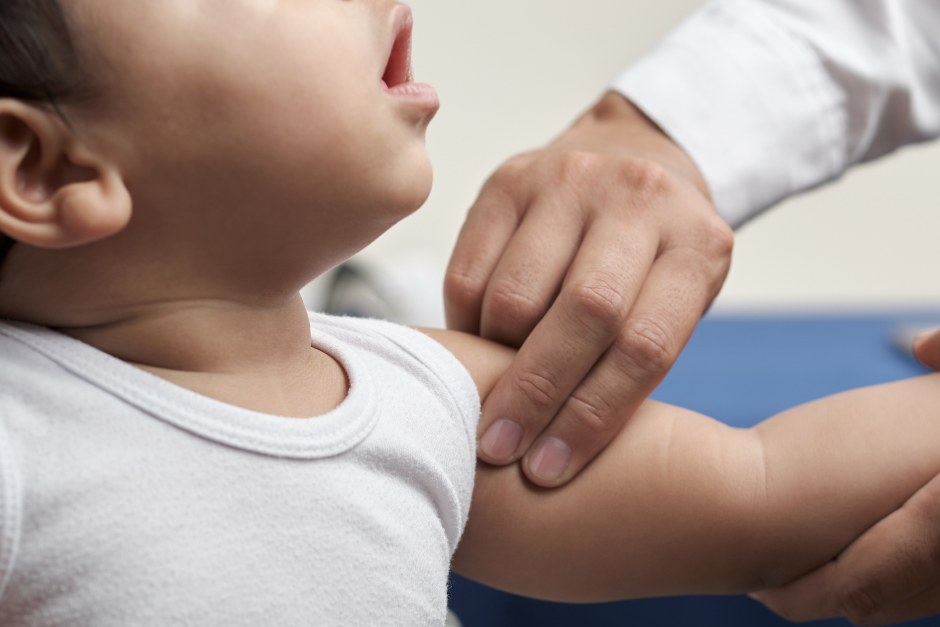
- Press the index and middle fingers gently on the inside of the upper arm for at least 5 seconds and no more than 10 seconds.
- Check the infant’s breathing:
- Observing the infant’s chest:
- Look for the rise and fall of the chest
- If there is no response, no pulse, and no breathing or no normal breathing e.g. gasping:
- Shout for help and activate the emergency response system (Code Blue Protocol).
- Get the emergency equipment (or send someone to do so).
1 RESCUER – CPR (Two-Finger Technique)
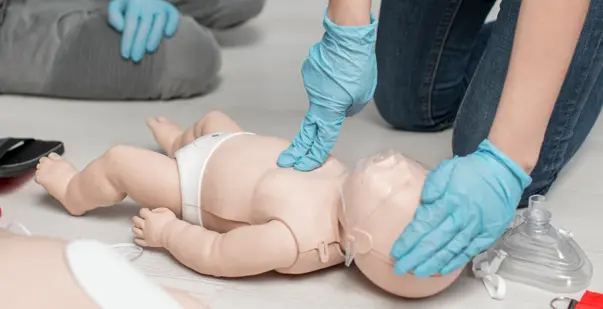
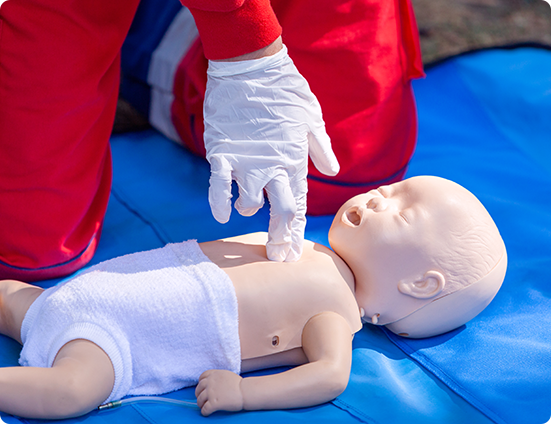
- Start performing 5 cycles of compression and ventilation (30 compressions : 2 breaths ratio within 2 minutes):
- Move or remove clothing from the infant’s chest
- Place 2 fingers (index and middle finger or middle finger and ring finger) in the center of the chest, just below the nipple line. This will allow you to compress the lower half of the breastbone. Do not press on the xiphoid process
- To give chest compressions, press the infant’s breastbone down about 1/3 of the depth of the chest (about 1 ½ inches or 4 cm)
- After each compression, completely release the pressure on the breast bone and allow the chest to recoil or re-expand completely
- Smoothly deliver compressions 30 times for 5 cycles.
- Counting for standardization purposes: 1, 2, 3…up to 29, 1 (the last count pertains to the number of cycles done)
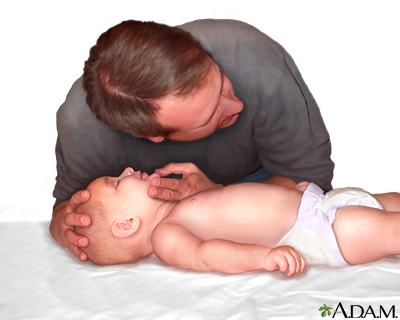
- In preparation for ventilation delivery, open the airway, place the infant in a sniffing or
neutral position:
- Place one hand on the infant’s forehead and push with your palm to position the head.
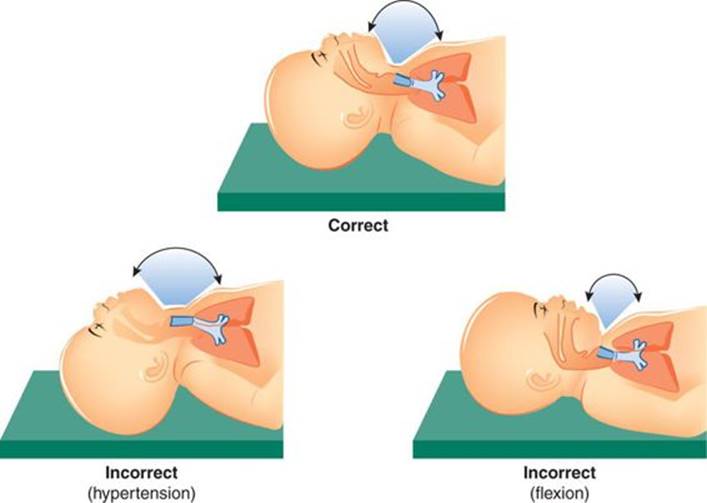
Note: the rescuer is not required to give ventilations by mouth-to-mouth and nose for his safety. Compressions only CPR will do in real life setting.
Delivering ventilations by MOUTH TO MOUTH AND NOSE:
- Maintain an open airway following implementation procedure no.5.
- Place your mouth over the infant’s mouth and nose to create an airtight seal.
- Blow into the infant’s nose and mouth (pausing to inhale between breaths).
- Observe the chest rise with each breath.
- If the chest does not rise, re-position the head and try to give an effective breath that will make the chest rise.
- Note: Using a mannequin/dummy for demonstration, you have to do the head-tilt-chin-lift maneuver to open the airway and make the chest rise with each breath.
- Give 2 normal breaths that are enough to make the chest rise. 2-3 seconds for each breath.
- Counting for standardization purposes:
- – Breathe, 1001… Breathe, 1002
- – Breathe means you give 1 breath blow
- Continue to perform 4 more cycles of 30 compressions and 2 ventilations to complete 5 cycles.
2- RESCUER CPR (1st rescuer will do compressions by 2 Thumb-Encircling Hands Technique and the 2nd rescuer will give ventilations through bag-valve mask)
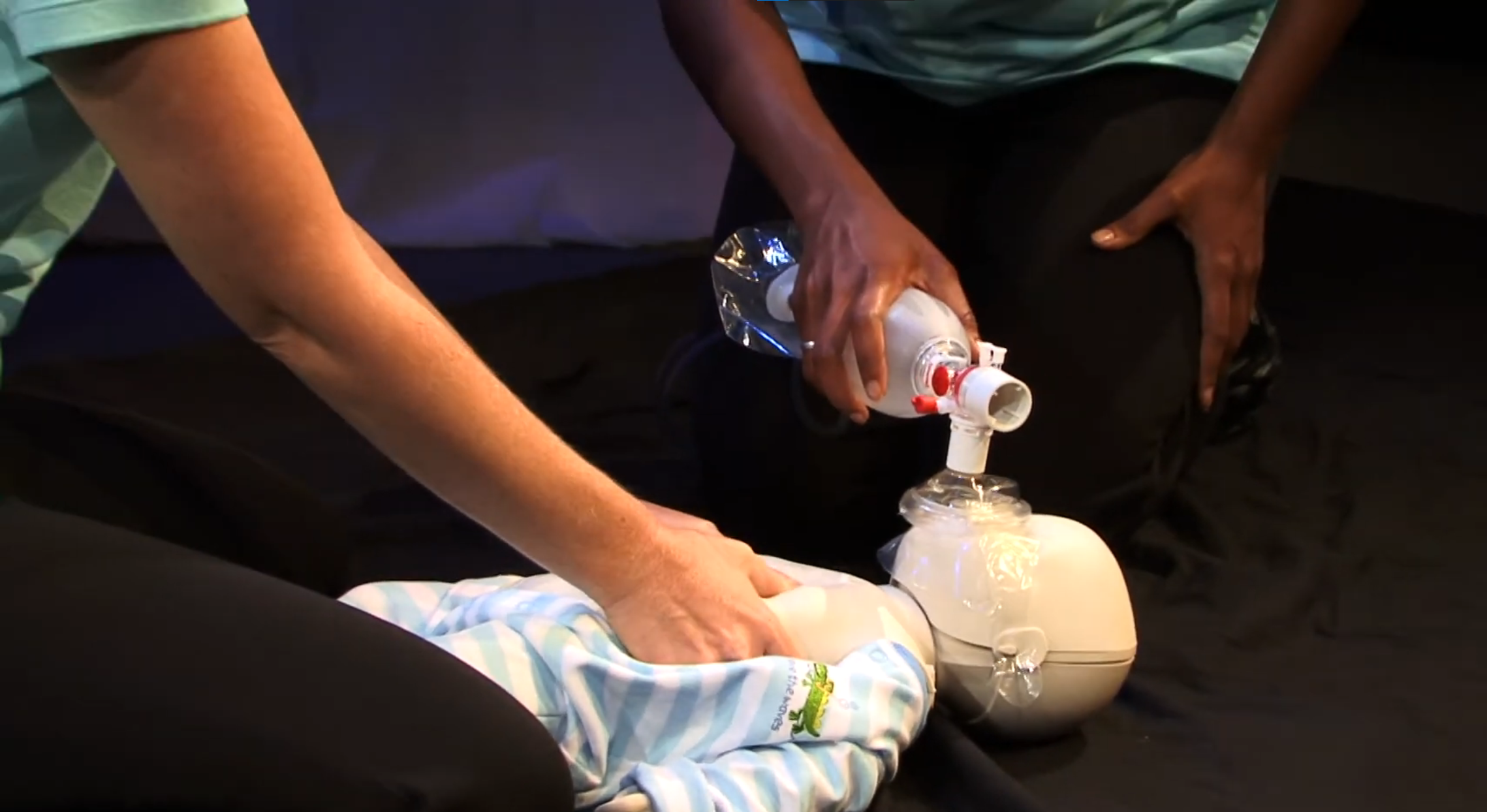
USING A BAG-VALVE MASK (2 ventilations to be delivered in 2-3 seconds each breath)
- Position the mask over the infant’s mouth and nose.
- Seal the mask over the nose, around the mouth, and above the chin area and open the airway using the EC Clamp Technique – With your non-dominant hand, use the three fingers to lift the jaw (they form the “E” while the thumb and the index finger hold the mask to the face (making a “C”).
- Using the dominant hand, squeeze the bag slowly until the chest rises.
- Counting for standardization purposes:
- – Breathe, 1001… Breathe, 1002
- – Breathe means you give 1 breath blow
- After delivering 2 effective ventilations, continue chest compression and ventilation cycle.
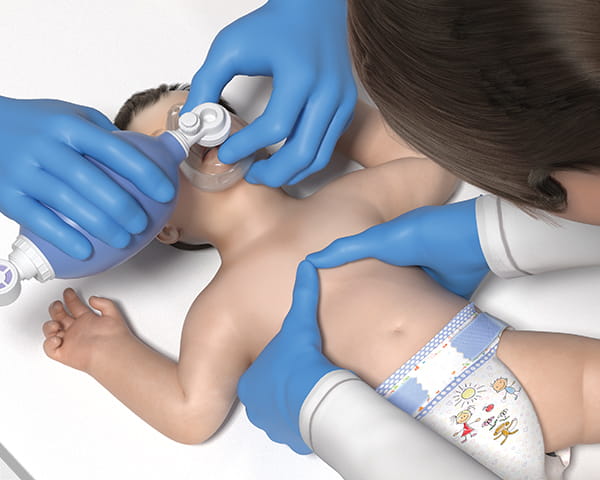
- For 2 or more rescuers, the ratio of compressions to ventilations is 15:2.
- Counting for standardization purposes: 1, 2, 3, … up to 14, 1 (the last count pertains to the number of cycles done)
- Give 2 ventilations after each cycle count.
- Continue giving compressions and ventilations to complete 10 cycles.
Evaluation
After completing the 5 cycles of CPR for one rescuer or 10 cycles for 2 or more rescuers, re-assess the infant’s pulse and breathing:
- If with pulse and with breathing, place the infant on the recovery position (Trendelenburg position on rescuer’s arms)
- If with pulse and no breathing, perform rescue breathing. Give 1 breath every 2-3 seconds or 40-60 breaths for 2 minutes, then re-assess.
- Counting for standardization purposes:
- Breathe, 1001…
- Breathe, 1002…
- Breathe, 1003…
- Breathe……. Up to 1060 and breathe
- Breathe,1001, 1001…
- Breathe,1001, 1002…
- Breathe, 1001, 1003…
- Breathe……. Up to 1040 and breathe
- After placing infant in the recovery position.
- Check vital signs.
- Do head-to-to examination.
- Remove gloves and discard.
Documentation
Document the procedure done as well as the time when the CPR started and ended. Also, if there are any medications given.