
Bag technique is a community health nursing procedure that involves the proper use of the Public Health Nurse (PHN) bag to prevent contamination while providing nursing care in the client’s home. Wound care is the systematic cleaning, assessment, and dressing of a wound using aseptic technique to promote healing and prevent infection.
Why is this procedure performed?
- To provide safe and organized nursing care during home visits
- To prevent contamination of the PHN bag and its contents
- To maintain aseptic technique while performing wound care
- To promote wound healing and reduce the risk of infection
- To protect both the client and healthcare provider during nursing procedures
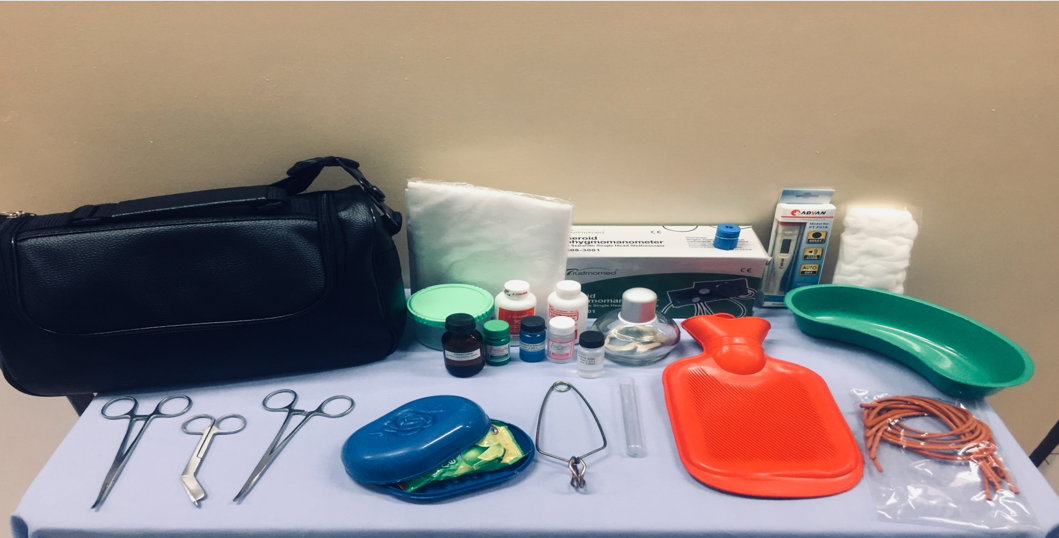
Materials Needed
- PHN Bag
- Paper lining
- Extra paper for making waste receptacle
- Plastic/linen lining
- Apron
- Hand towel in plastic bag
- Soap in soap dish
- Thermometer
- Surgical scissors
- Bandage scissors
- Curved forceps
- Straight forceps
- 5cc syringe
- 3cc syringe
- Needle gauge 19 / gauge 22 / gauge 23 / gauge 25
- Sterile dressing / gauze
- Sterile plastic cord clamp
- Micropore / adhesive plaster
- Cotton balls: Dry and Wet (70% Alcohol) in separate containers
- 70% alcohol
- Medicine tray
- Sterile gloves
- Baby’s scale
- Alcohol lamp
- Test tubes (2)
- Test tube holder
- Betadine bottle small
- Erythromycin ointment
- Hydrogen peroxide bottle
- Spirit of ammonia bottle
- Acetic acid bottle
- Benedict’s solution bottle
Note: BP apparatus and stethoscope are carried separately.
Assessment
- Observe the surroundings for areas where one can perform bag technique with ease and effectiveness.
Planning
- Introduce self, verify the client’s identity and explain the procedure.
- Explain to the family the purpose of your visit.
- Explain what you are going to do and the reason for doing the procedure.
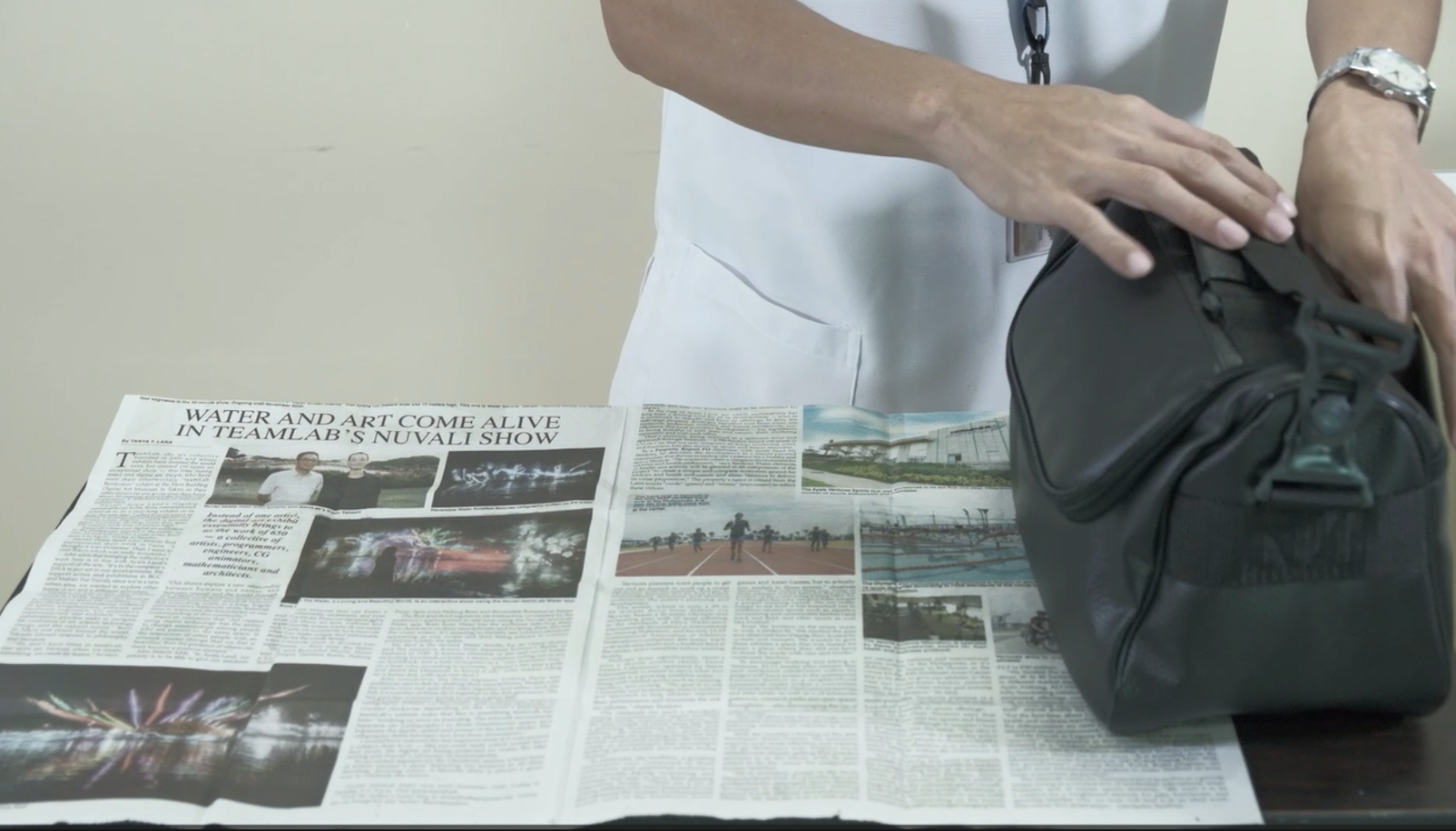
- After entering client’s house, take paper lining from the back pocket of the bag.
- Lay paper on a flat surface of a table, chest or box, if none use floor. The clean side must be out, and the folded part is touching the table.
- Place the bag on the left side of the paper lining with the bag opening facing the working area.
Implementation
- Open the bag and take out the plastic lining.
- Place the plastic lining over the paper lining and ask for a basin with water.
- Bring out soap with soap dish and towel.
- Close the bag without locking and perform handwashing. Wipe hands dry with a towel.
- After handwashing, put the soap and soap dish on the paper lining (outside the plastic lining) with a hand towel on top of the soap dish.
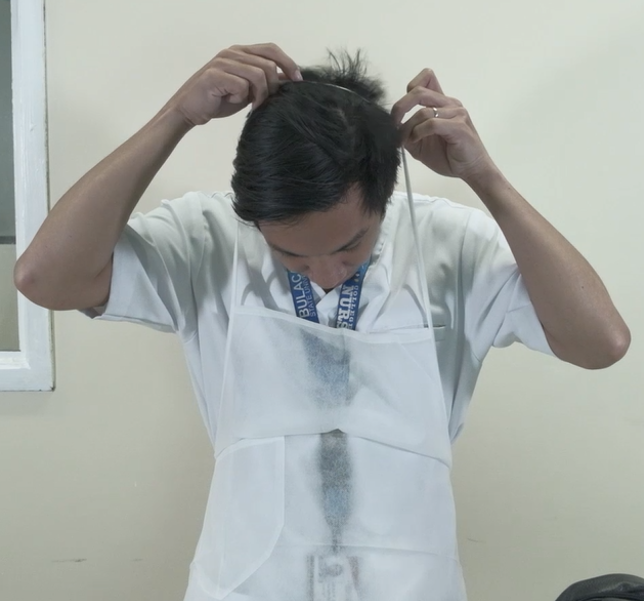
- Put on the apron while observing proper technique.
Wound Care
- Assist the patient to a comfortable position that provides easy access to the wound area.
- Bring the articles needed for care from the bag, making sure that they are placed within the plastic lining.
- Gauze
- Cotton balls
- Povidone-iodine Solution
- Kelly forceps
- Gloves
- Tape
- Place a paper receptacle outside the work area.
- Close the bag without locking and perform nursing care.
- Don clean gloves.
- Loosen the tape on the old dressings and carefully remove the soiled dressing. If any part of the dressing sticks to the underlying skin, use small amounts of sterile saline to help loosen and remove it.
- Note the presence, amount, type, color, and odor of any drainage on the dressings.
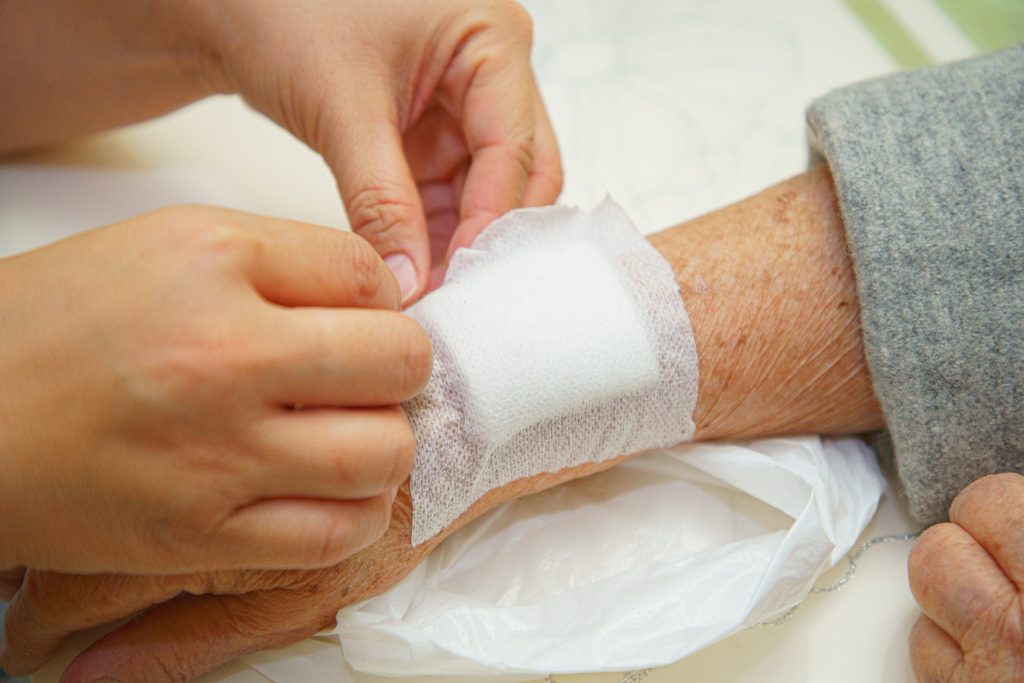
- Place soiled dressings in the appropriate waste receptacle.
- Remove your gloves and dispose properly.
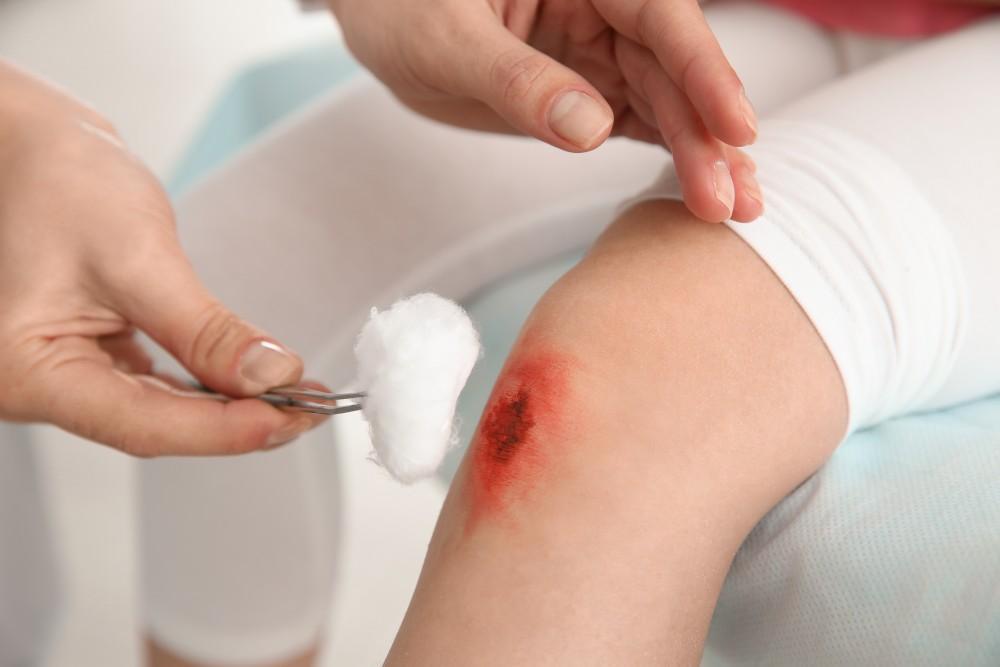
- Inspect the wound site for size, appearance, and drainage. Assess if any pain is present.
- Pick up a cotton ball using Kelly forceps and pour the povidone-iodine solution on the cotton ball until soaked.
- Clean the wound from top to bottom and from the center to the outside in circular motion. Use a different cotton ball with betadine for each wipe.
- Apply gauze of appropriate size over the wound.
- Apply tape to secure the dressing.
- Perform aftercare of articles used. Disinfect with alcohol including the top of the plastic lining.
- Discard the paper receptacle.
- Wash hands.
- After handwashing, open the bag and return all articles used.
- Return the soap and the soap dish inside the bag last (with the hand towel under the soap dish).
- Take off and fold the apron using the proper technique and return to the back pocket of the bag.
- Fold the plastic lining (clean-side out) and return to the back pocket of the bag.
- Close and lock the bag.
- Get the bag; fold the paper lining without touching the contaminated side and discard.
Evaluation
- The bag and its contents are well protected from contact with any article in the home of the patient.
- The bag and its contents are free from infection.
DOCUMENTATION
Record pertinent data on mother and newborn assessment record.
Record medication data including: dosage, route of administration, time of administration, signature.